
Does Tattoo Numbing Cream Really Work? What You Need to Know
What is Tattoo Numbing Cream? Understanding Its Role in Tattoo Pain Relief
Tattooing is a meaningful experience, but it can come with moments of discomfort—especially during long sessions or on sensitive areas of the body. As black and grey realism specialists who work on large-scale pieces every day, we understand how valuable proper pain management can be for both the artist and the client.
Tattoo numbing cream has become one of the most common and effective ways to reduce discomfort during tattoo sessions. In this guide, you’ll learn what numbing cream is, how it works, when to use it, safety considerations, and how to get the most out of it for your next appointment.
Tattoo numbing cream is a carefully formulated topical anesthetic designed to reduce the pain associated with tattoo procedures. When applied to the skin before tattooing, it works by blocking the transmission of pain signals from nerve endings beneath the skin. This results in a smoother, more comfortable tattooing experience, especially beneficial during lengthy sessions or tattoos placed in sensitive areas.
The primary function of tattoo numbing cream is to inhibit the sodium channels in nerve endings—channels that are essential for sending pain signals to the brain. By numbing these pathways, the sensation of pain is significantly diminished. Common active ingredients include lidocaine (typically between 4% and 10%), tetracaine, benzocaine, and occasionally epinephrine, which enhances absorption and reduces bleeding.
The calming effect of a high-quality numbing cream not only alleviates discomfort but also minimizes involuntary movements such as twitching. This allows tattoo artists in Oakville to maintain focus and precision—especially important for the intricate black and grey realism style, which we explore in detail in our post on black and grey tattoo ideas

Tattoo Numbing Cream
Does Tattoo Numbing Cream Work? Effectiveness and Expectations
The effectiveness of tattoo numbing creams depends on several factors. The duration and extent of numbness are largely influenced by the concentration of active ingredients like lidocaine and proper application of the cream—ideally, applied 30 to 90 minutes before the tattoo begins to ensure adequate absorption.
Quality is critical; only creams that meet strict health and safety standards provide consistent pain relief. Individual factors such as skin type and pain tolerance also affect performance.
Typically, users can expect pain relief lasting from 1 to 4 hours, with some premium formulations offering relief up to 6 or 8 hours. While many report significant comfort improvements, some may experience mild or uneven numbness, often due to inconsistent application or lower-quality products.
Lidocaine creams are known for fast onset, tetracaine offers longer-lasting numbness, and benzocaine primarily impacts the skin's superficial layers. As numbness subsides, some people may experience an “endorphin rebound”—a temporary increased sensitivity more intense than the original discomfort.
While many tattoo professionals recommend numbing creams, it is essential to use products specifically formulated for tattooing to avoid potential changes in skin texture or pigmentation.
How to Use Tattoo Numbing Cream for Optimal Tattoo Session Comfort
For best results, begin with a patch test at least 24 hours before your appointment to check for any adverse reactions.
On the day of your tattoo, ensure the skin is clean and dry. Apply a generous layer of numbing cream 30 to 60 minutes before the session starts. To boost absorption and prevent evaporation, cover the area with plastic wrap or a similar occlusive material. This helps the cream penetrate deeper into the skin, enhancing the numbing effect.
Just before tattooing begins, remove the covering and gently wipe away any excess cream. Avoid applying numbing cream to irritated or broken skin, as this can increase side effects or reduce effectiveness.
Follow the manufacturer’s instructions carefully regarding application timing and dosage. Reapplying cream during the session is generally discouraged, as it can interfere with the tattooing process and affect the clarity and detail of the design. For additional preparation tips, see our guide on how to prepare for a tattoo
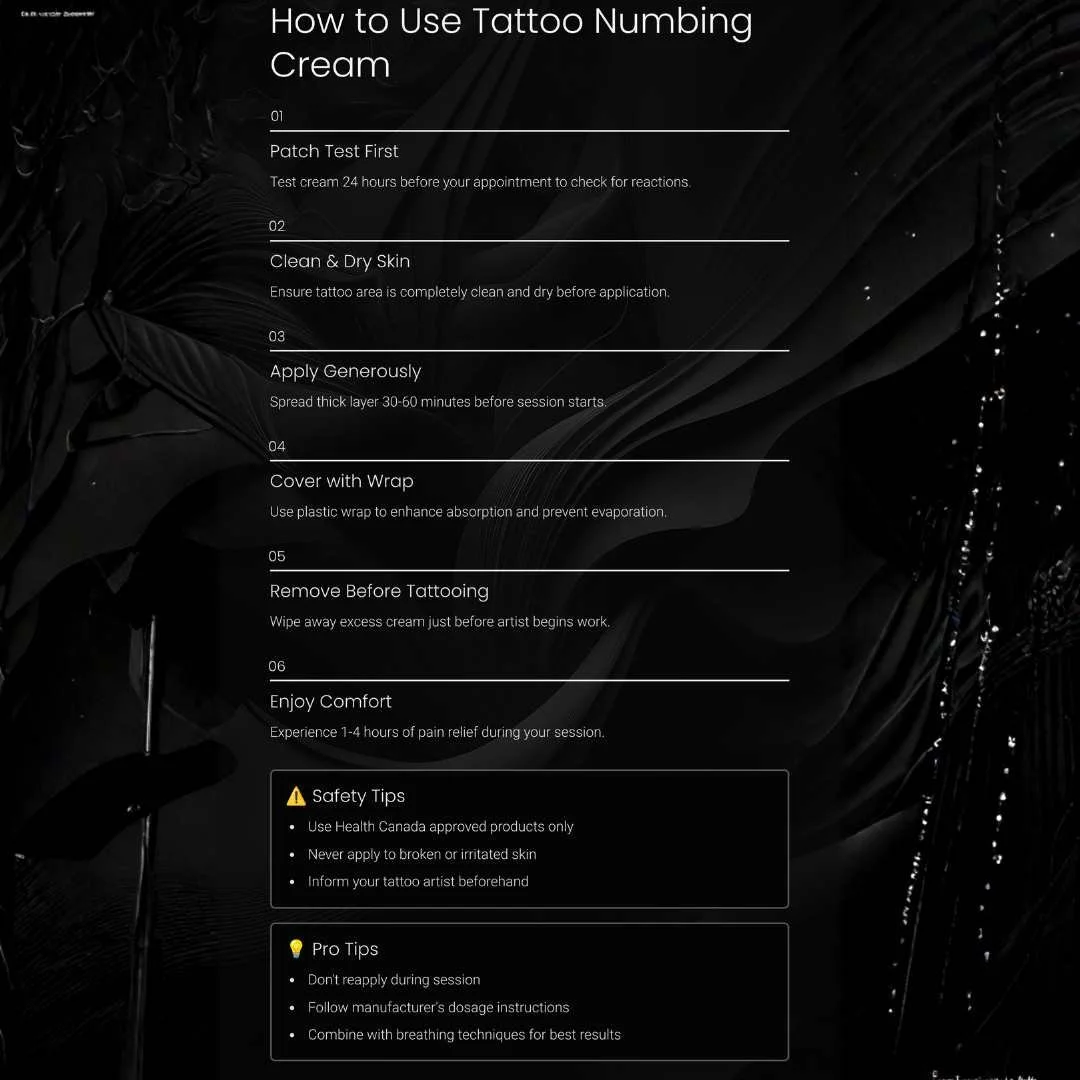
Tattoo Numbing Cream Step Guide
Tattoo Numbing Cream Safety: What You Need to Know
When used as directed, tattoo numbing creams are safe. Selecting products approved by Health Canada ensures adherence to high safety standards. However, safety depends on proper application and not exceeding recommended dosages.
Common side effects include mild redness, swelling, or itching. Although rare, allergic reactions can occur and require prompt medical attention.
Excessive use of potent anesthetics such as lidocaine or tetracaine may lead to systemic toxicity, highlighting the importance of moderation. Always inform your tattoo artist if you intend to use numbing cream, as some may advise against it or suggest safer alternatives.
Avoid expired products or unapproved remedies, as these carry unknown risks. At Zen Tattoo Studio in Oakville, we use only thoroughly vetted numbing creams as part of our commitment to your comfort and safety. If you’re new to tattooing, our beginner’s guide to a first tattoo session offers valuable insights into what to expect.
Tattoo Pain Management Alternatives and Enhancements
While numbing creams are effective, other options are available for managing tattoo discomfort. Topical gels and sprays with anesthetics can provide quick pain relief, though their duration varies.
Mindfulness practices, such as controlled breathing and meditation, also help manage pain during sessions. Some clients consider mild oral pain relievers, though these are not suitable for everyone due to potential effects on bleeding and healing.
Often, combining methods achieves the best results. Taking short breaks and applying cold compresses before (but not during) the tattoo can also reduce discomfort and swelling.
Effective pain management depends on clear communication between client and artist to tailor approaches that suit individual needs and tattoo placement, promoting a safer and more pleasant experience. For more information on pain levels across different body areas, see our tattoo pain chart

Tattoo Numbing Creams & How They Work
FAQs About Tattoo Numbing Cream
Is numbing cream safe for tattoos?
Yes. When used following Health Canada guidelines and manufacturer instructions, numbing creams are safe. Most complications arise from improper use or unapproved products.
How long does numbing cream last?
Numbing effects typically last 1 to 4 hours, with some advanced formulations extending up to 6 to 8 hours.
Can I reapply numbing cream during a tattoo session?
Reapplication during a session is usually discouraged to avoid compromising skin integrity and tattoo quality.
Will numbing cream affect the tattoo's healing or appearance?
Creams designed specifically for tattoo use do not negatively impact healing or color retention. Using non-specialized products may affect results.
Can numbing cream cause allergic reactions?
Allergic reactions are rare but possible. Conducting a patch test beforehand reduces this risk.
Is it okay to use numbing cream for sensitive areas or large tattoos?
Yes, numbing creams are particularly helpful for sensitive or extensive tattoos, but professional consultation and patch testing are important.
Do numbing creams work for everyone?
Effectiveness varies; individuals with higher pain thresholds or specific skin types may experience less noticeable relief.
At Zen Tattoo Studio, your comfort and safety are our highest priorities. We provide thorough guidance on the use of numbing creams, proper application, and safety considerations to ensure your tattoo experience is as smooth and enjoyable as possible.

Full Back Tattoo (Tattoo Numbing Cream Used)
Sources
Source: U.S. Food and Drug Administration — Local Anesthetics (https://www.fda.gov/drugs/drug-safety-and-availability/local-anesthetics)
Source: Health Canada — Safety information on topical anesthetics (https://www.canada.ca/en/health-canada/services/drugs-health-products/drug-products/medeffect-canada/drug-safety-reviews/safety-information-topic-local-anesthetics.html)
Source: American Academy of Dermatology Association — Topical Anesthetics: Uses and Risks (https://www.aad.org/public/diseases/a-z/topical-anesthetics)
